- Impact Driven Leader Newsletter
- Posts
- Still Armed Looking For the Next Battle
Still Armed Looking For the Next Battle
When the Chip on Your Shoulder Keeps You From the People Who Matter

Tyler Dickerhoof
April 10, 2026 • Estimated Reading Time: 4 minutes
“The only way to be fulfilled in life is in a relationship because what you have needs to be shared.”
I was with John Maxwell in Guatemala a few years ago. We happened to be taking our bags to our cars at the same time.
A bellman came to carry his bags. I was nearby, and my instinct was to wave the bellman off. I’ll take my own. I always had.
John stopped me. He said something I’ve never forgotten: If you don’t let him do his job, you’re telling him he’s not worthy.
I’d never thought of it that way.
Growing up on a farm in northeast Ohio, I couldn’t wait for help. There wasn't anyone to help me, even if I asked. Help was for people who couldn’t handle it on their own. There was always more to do than there were hands to do it. You just kept moving.
That independence made me productive. It made me reliable. It made me the guy you could count on.
It also made me the guy who never needed anything from anyone. Not a bag carried. Not a conversation about what was hard. Certainly not a request.
I thought I was being strong. I was sending a message I never meant to send: I don’t need you.
The Things We Hide — Moment
In The Things We Hide, I write about the Training Ground, the gym Kelley and I opened in 2013.
We had a young trainer on staff. He’d been with us for years. He cared about the clients, the culture, every bit of it. I believed in him. I wanted to see him grow.
One day, I showed up to do the weekly cleaning he was responsible for. He had called in sick the day before, so I was covering for him. However, he was at the gym working out during closed hours with their friends.
I was upset. And I let him know it.
There was no room for anything that didn’t meet my standard. Get with it or get gone.
I left, I’d come back and clean later. What I didn’t see then, though I can see it clearly now, is this: I cared deeply about that person. But I showed up still armed. My intensity wall was fully in place. I was the warrior who came home from battle and never took off the chestplate.
I wasn’t trying to push him out. I was trying to protect something. The standard. The expectation. The way I had learned to survive.
Molly Sloan, an early member of the IDL Roundtable, described intensity this way: it’s like a bright light. In the middle of the day, it’s fine. But at 3 a.m., when your kids walk in and turn on the light, the reaction is the same: hands up, eyes covered, begging for it to stop.
That trainer didn’t need me to be right. He needed me to let them in.
The armor that protected me on the way up had no business in the relationship I was trying to build.
Podcast
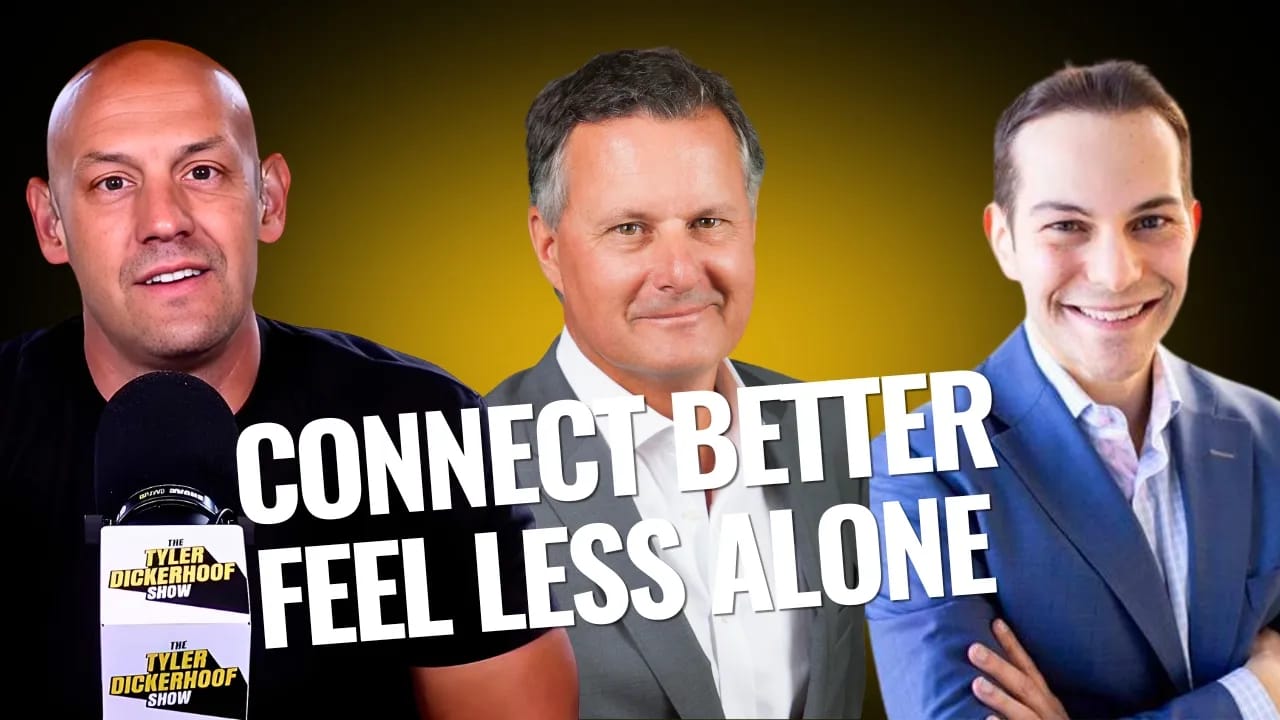
Mo Lidsky and Bob Gould have spent decades inside the closest rooms of some of the most successful families in North America. As advisers, they have sat with wealth, power, and achievement at the highest levels. What they kept seeing was a paradox: people who had built everything but couldn’t connect with anyone. Their book, Konnect Better: Unlocking the Power of Your Relationships, is the culmination of that work.
Here are three things from my conversation with Mo and Bob that I think every leader needs to sit with.
The Armor That Won the Battle Will Lose the Peace
Mo described the ultra-successful as warriors. They came up with a chip on their shoulder. They armored up. They went out into the world with spears, swords, and shields while everyone else was still figuring out what those things were. And they won. They came home with the spoils. The problem: they never took the armor off. So now they’re standing at the door of the relationships that matter most, and nobody wants to get close. Mo said it plainly: “They don’t know when to put down the sword and the shield. And it’s not easy. In so many ways, it’s at the level of the subconscious.” The tools that built their life are the same tools destroying it. And most people won’t recognize it until the pain of staying the same outweighs the pain of change.
Net Worth and Self-Worth Are Not the Same Account
Mo said something rang true in my experiences: “It was kind of surprising to discover that net worth and self-worth are virtually unrelated concepts.” The more someone could handle by writing a check, the less they actually had to face about their own value. External validation replaced internal worth. What made them productive made them hollow. And the cruel irony is this: the very success that was supposed to prove they were enough actually deepened the question. Because now the only thing standing between them and worthlessness is the next deal, the next outcome, the next number. That’s not security. That’s a trap.
Letting Someone Serve You Is an Act of Connection
Mo shared a story that hit me differently after the bellman moment. Seventeen years into his marriage, he asked his wife for help for the first time. One thing. He wrestled with it all night. At 7 a.m., when she would normally wake up, he finally said it: “I think I need your help.” Her reaction was joy. Not burden. Not frustration. Overjoyed to be needed. Mo’s identity had been the provider, the one who handles everything, the person others lean on. Asking for help felt like failure. It wasn’t. It was the most connecting thing he had ever done. Bob put it simply: the highest form of caring for people is allowing them to care for you.
Put down the Sword — The IDL Summit, May 7–8, Spokane
This conversation is exactly why I built the Summit.
Mo and Bob’s work is about one thing: what happens when successful people finally put down the armor. On May 7–8 in Spokane, WA, that’s what we’re doing. 120 leaders. Two days. One room where nothing gets hidden.
Nikki Barua spent years performing a version of success she thought she was supposed to want. She’ll tell you what it costs to stay armed and what it takes to finally rebuild from the inside.
Joe Delagrave broke his neck at nineteen and spent years showing the world an inspiration he didn’t feel on the inside. His message: put down the face. The real work starts underneath it.
Dr. Abbie Maronó studies what people actually signal to each other, whether they mean to or not. If you’ve been walking around still armed, she can show you exactly how it’s landing.
General Admission is $499. Buy two for $900.
VIP is $999 and includes a private dinner with the speakers.
Over 50 tickets still remain.
Get your tickets: idlsummit.com
Did you catch this podcast? If not, listen to it here.