- Impact Driven Leader Newsletter
- Posts
- Who Are You Without It?
Who Are You Without It?
When Identity Meets the Moment That Changes Everything

Tyler Dickerhoof
March 13, 2026 • Estimated Reading Time: 5 minutes
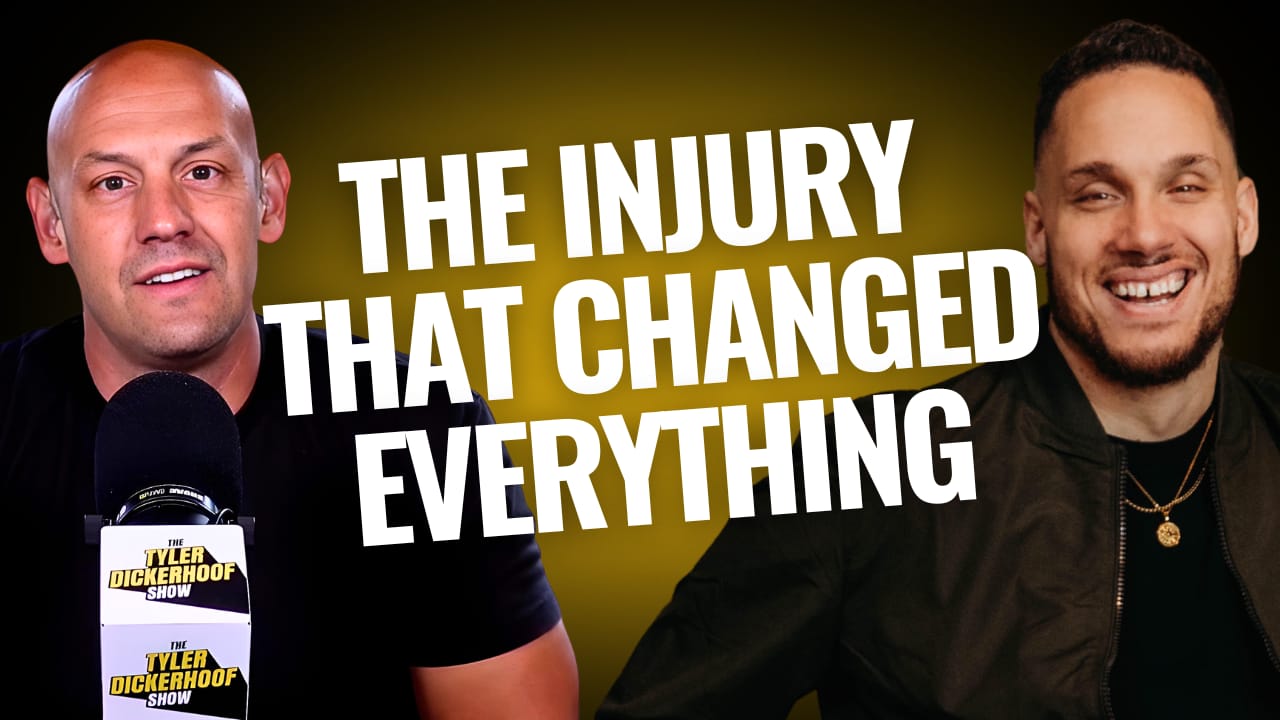
“Knowing your purpose outside of the sport will make you better inside your sport. There’s a lie that’s been told to athletes over and over again—that tunnel vision is the only way.”
If your life changed massively overnight—who would you be?
Not what would you do. Not how would you cope. Who would you be?
At many times, I’ve sat with that question. I have wondered who my brother Joel would be.
I have wondered what it would have been like had he been paralyzed instead.
And then last week, I thought about what things would be like again.
This time, I was sitting at my dad's bedside as he recovered from surgery.
My dad had a conversation with his surgeon earlier that day.
The surgeon had asked about a scar my dad has on his left shin. A scar I knew my dad had. I knew what caused it, but I never knew the story behind it.
When the surgeon, my dad, paused—and then told a story I’d never heard before.
When he was a sophomore in high school in the mid-1960s, he had a tumor removed from that leg. He went through it, recovered, and kept going. Went on to be his team’s high school football MVP and captain.
He went on to play college football, starting on offense and defense as a freshman, no less.
The surgeon stared at the scar for a long moment.
“Normally,” he said, “people who have that kind of tumor are amputees.”
My dad got choked up telling me about the conversation.
Not because of what he’d been through.
Because of what his life could have been without his leg. Football. A farm. Our family. Any and all of it.
One moment in a surgeon’s office in the 1960s, and the entire story of our family looks like an alternate timeline from Back to the Future.
Who would he have been? Who would any of us have been?
That’s the question Joe Delagrave had to answer—not in a surgeon’s office, but in a hospital bed at nineteen, three days after doctors told him he would never walk again.
The Things We Hide — Moment
Joe described his first year after the accident this way: everyone around him said he was an inspiration. And when he was alone, he was going— I have no clue what I’m doing here.
That gap—between the face we show and the fear we carry—is exactly what The Things We Hide is about.
I recognize it because I’ve lived it. Not with a spinal cord injury—but with the quieter kind of paralysis that comes when you’re trying to prove your worth.
When you push so hard just to survive and keep your head above the water line of insecurity.
For a long time, I hid behind competence. I was the guy who tried hard to find what I could do to be accepted by others. That felt like an asset—until I realized it was a wall.
If I’m always trying to be “someone others valued”, I never have to sit with who I actually am. I never have to ask whether the doing is even working. I never have to admit that I’m drowning behind a very convincing display of effort.
Joe gained weight after his accident. He hid from going out in public in his wheelchair. He prayed to be healed so he wouldn’t have to face the version of himself sitting in the chair. The hiding looked different from mine—but the instinct was the same.
What got him out wasn’t a strategy. It was a question:
What’s the next step?
Not the whole picture. Not the destination. Just the next step. Get a little more comfortable in the chair. Go back to school. Ask the football coach if you can watch film. Say yes to the guys who see something in you that you can’t see yet.
When we get in our head, worrying about what has been or could be, just remember this: take the next step. Stop performing. Start moving.
Podcast
Joe Delagrave was a six-foot-six Division II tight end at Winona State in Minnesota—until a boating accident on the Mississippi River broke his neck at C6-7, and everything he thought he was went with it.
What followed wasn’t a straight line. It was weight gain, uncertainty, hiding from the public in his wheelchair, and the suffocating distance between who he used to be and who he was becoming. It took a hard truth from his best friend—the same friend who was driving the boat—to spark the first real step toward change.
That step led to wheelchair rugby. Rugby led to Phoenix. Phoenix led to getting cut, twice, from national teams he was chasing. And eventually, it led to a world championship, a Paralympic medal, and now—as head coach of USA Wheelchair Rugby—the chance to build something in others that was once built in him.
Here are three takeaways from my conversation with Joe that I hope you can hang on to as you wrestle with what to do next.
1. An Incident Doesn’t Have to Be a Verdict
Joe described how, after his accident, he began living inside the boundaries the world handed him. He’s in a wheelchair now, so certain things just aren’t possible. That belief felt true. It wasn’t. The wheelchair wasn’t the verdict—his acceptance of other people’s story about it was. The moment he separated the incident from the identity, something shifted. He couldn’t change what happened on the river. He could decide what it meant for what came next.
2. Readiness for the Unknown Opportunity
Joe got his spot on the US wheelchair rugby team not by perfectly executing a plan, but by being ready when a door opened sideways. A teammate retired mid-cycle. The coach called. He stayed ready, he kept working, and when the moment came, he was prepared for it. His insight was simple and devastating: you don’t know when the opportunity is coming, but if you’re not ready for it, it doesn’t matter. Most of us are so focused on the plan we’ve drawn that we miss the door that’s actually open.
3. Purpose Beyond the Platform Protects You in the End
As a coach, Joe watches elite Paralympians win gold medals—and immediately spirals into the question he faced at nineteen: Who am I without this? The sport told them to tunnel vision. Tunnel vision worked. And then the tunnel ended. Joe’s conviction now—the thing he’s actively coaching into his players—is that knowing your purpose beyond the jersey doesn’t distract you from competing. It protects you from the collapse that comes when the competition stops. It’s not just a sports problem. Every leader who’s built their identity around a title, a company, or a season of results will face this same moment.
See Joe — The IDL Summit, May 7–8, Spokane
This conversation is exactly the kind of truth the IDL Summit was built for.
Joe Delagrave will be one of our keynote speakers on May 7–8 in Spokane, WA—and if you’ve heard him on this episode, you already know: hearing him in a room is going to be something different. His story isn’t polished, almost too good to be true. It’s honest. And the frameworks he’s built around identity, reframing beliefs, and purpose-driven performance are exactly what leaders at every level need to hear right now.
Nikki Barua, Dr. Abbie Maronó, and I’ll join him. Four perspectives. Two days. 120 leaders in a room where nothing gets hidden.
General Admission is $499. VIP is $1,999 and includes a private dinner with the speakers and a deeper, more personal experience.
Seats are limited to 120. If you’re ready to stop letting the incident define you—and start leading from who you actually are—I’d love to see you there.
Get your tickets: idlsummit.com
Did you catch this podcast? If not, listen to it here.